

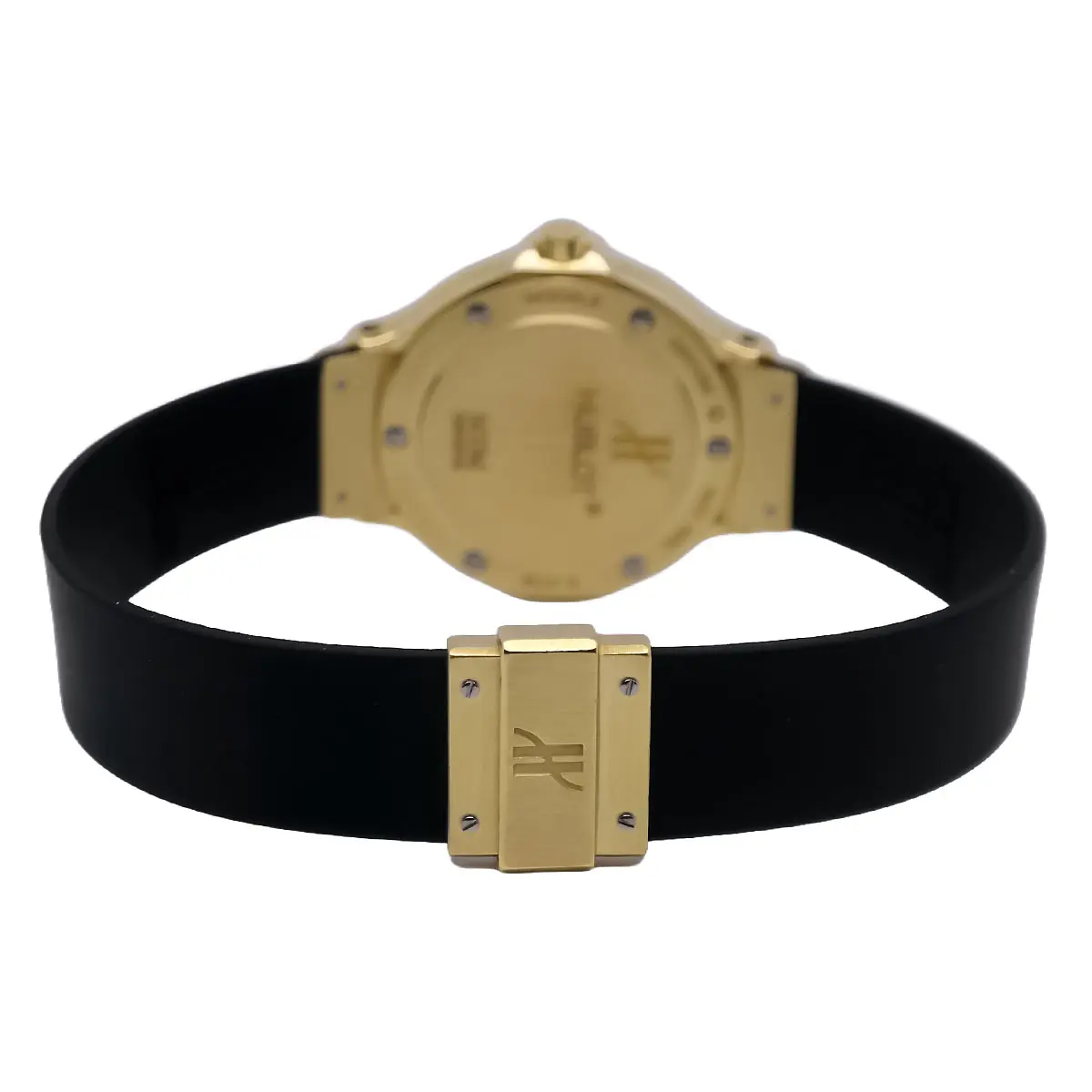


Hublot Classique 28 Yellow Gold
Concept & History
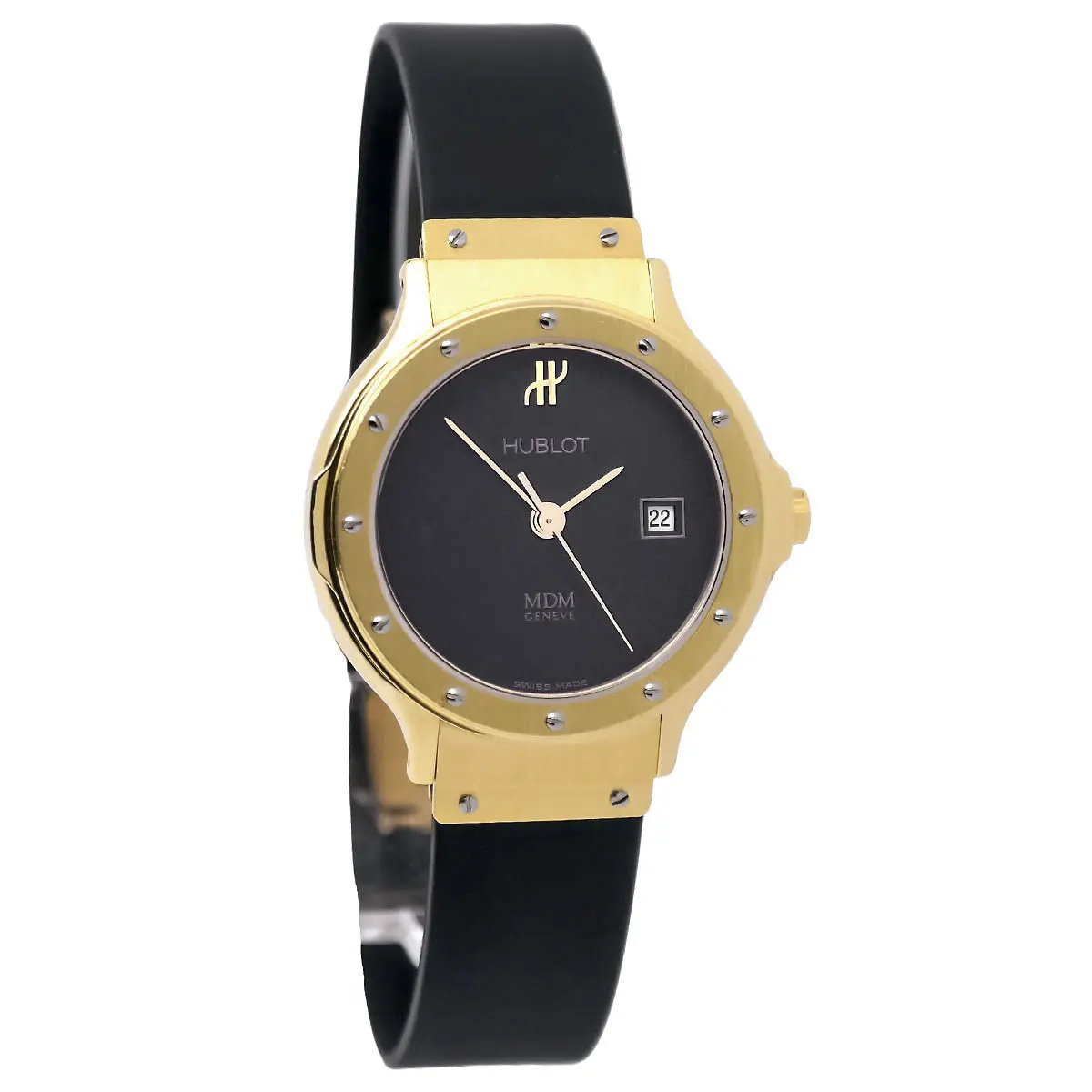
Reference 1391.3 belongs to the Classic collection, with which Carlo Crocco founded the Hublot brand in 1980—characterized by its distinctive porthole shape and the combination of precious metal and a rubber strap, which was unusual for the time. The company originally operated under the name MDM Genève, which is why many early Classic models bear both signatures. The minimalist dial design without hour markers classifies this model as part of the Classic Depose line.
Caliber & Technology
The watch is powered by the 956.412 (ETA) caliber, a quartz movement with a seconds hand and date function that was used in various material versions in Hublot’s Classic collection. During this period, ETA supplied numerous Swiss brands with quartz calibers of this type. The service documented in 2024 included a check of the timekeeping accuracy as well as the replacement of components prone to wear. The date display at the 3 o’clock position adds a practical extra function to the minimalist time display.
Case & Material
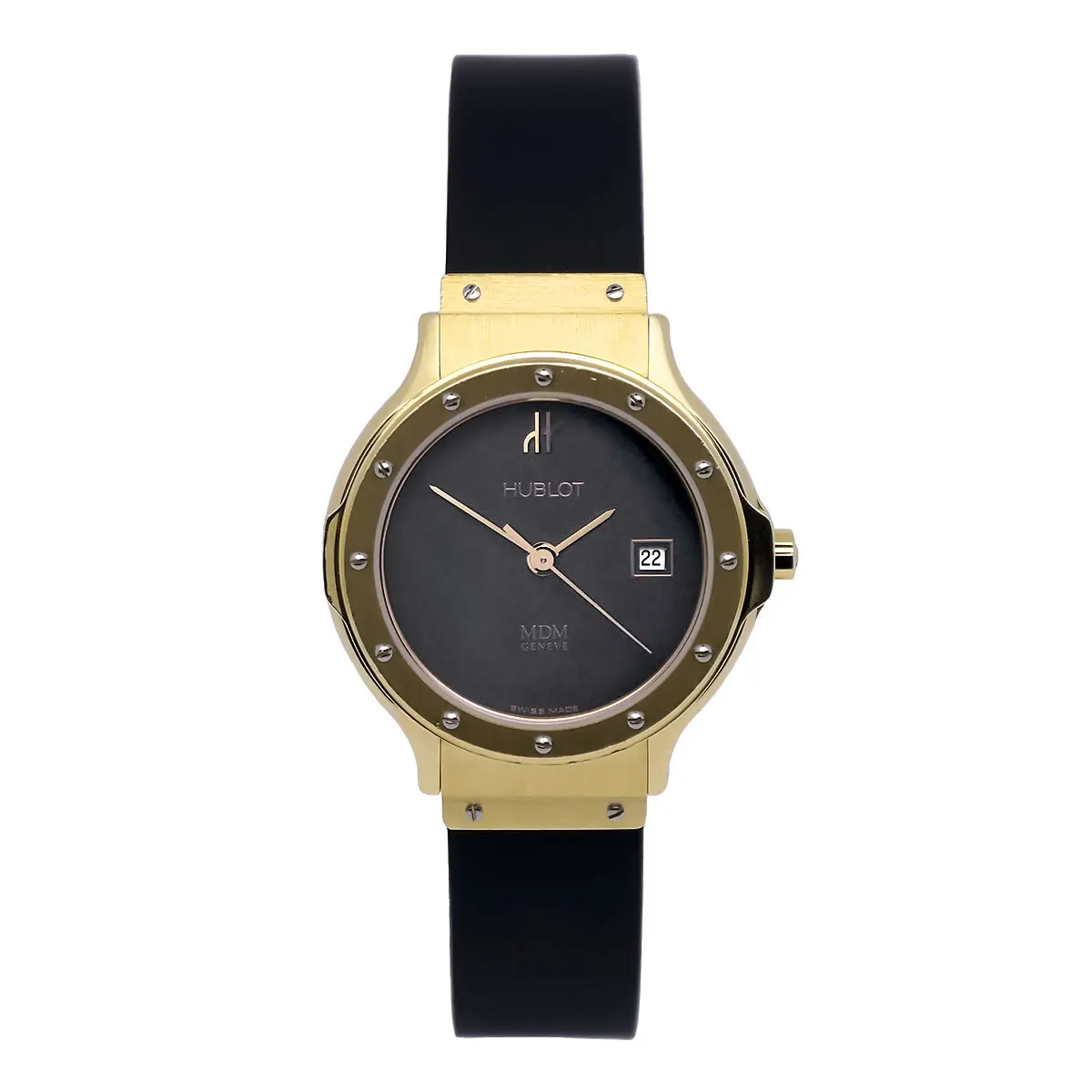
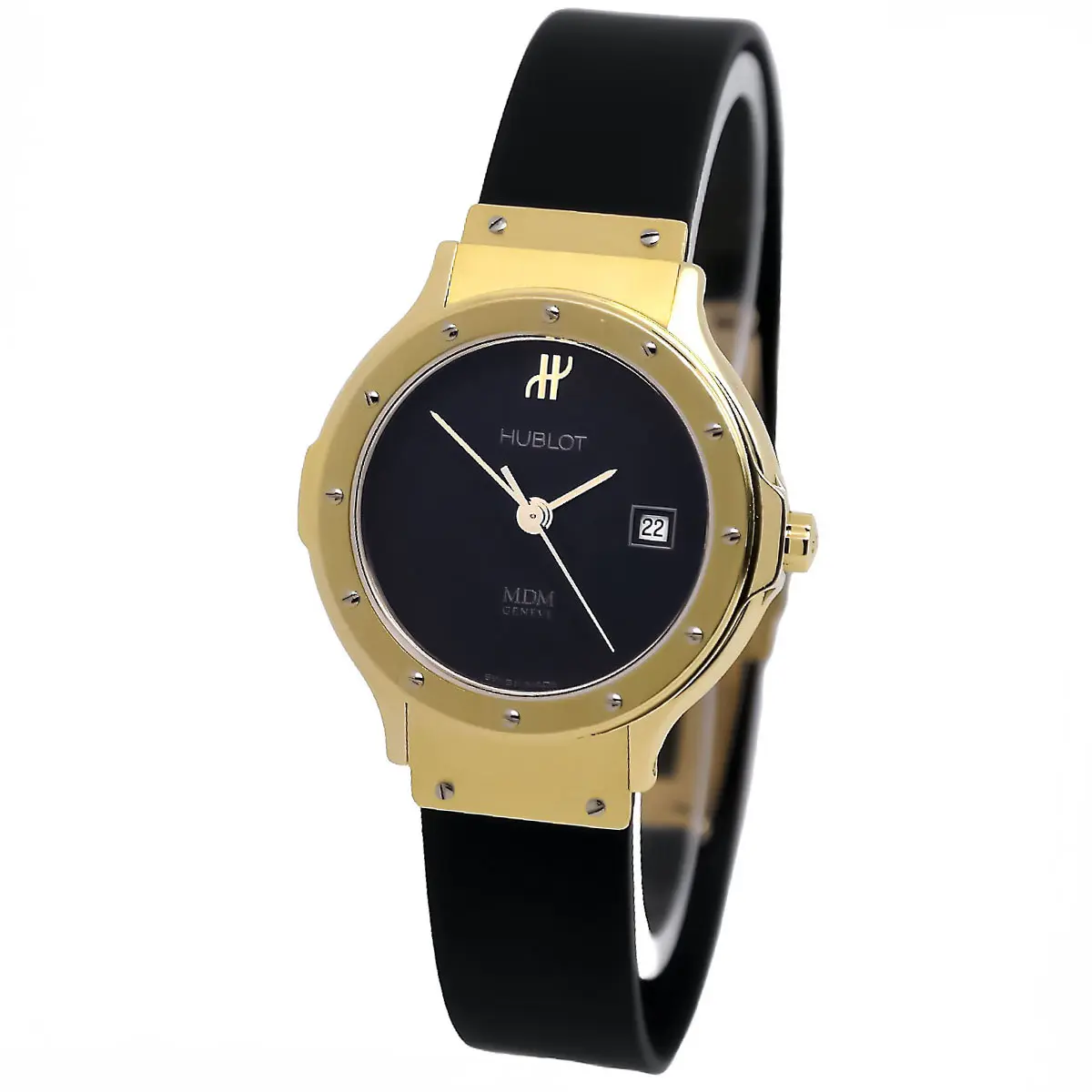
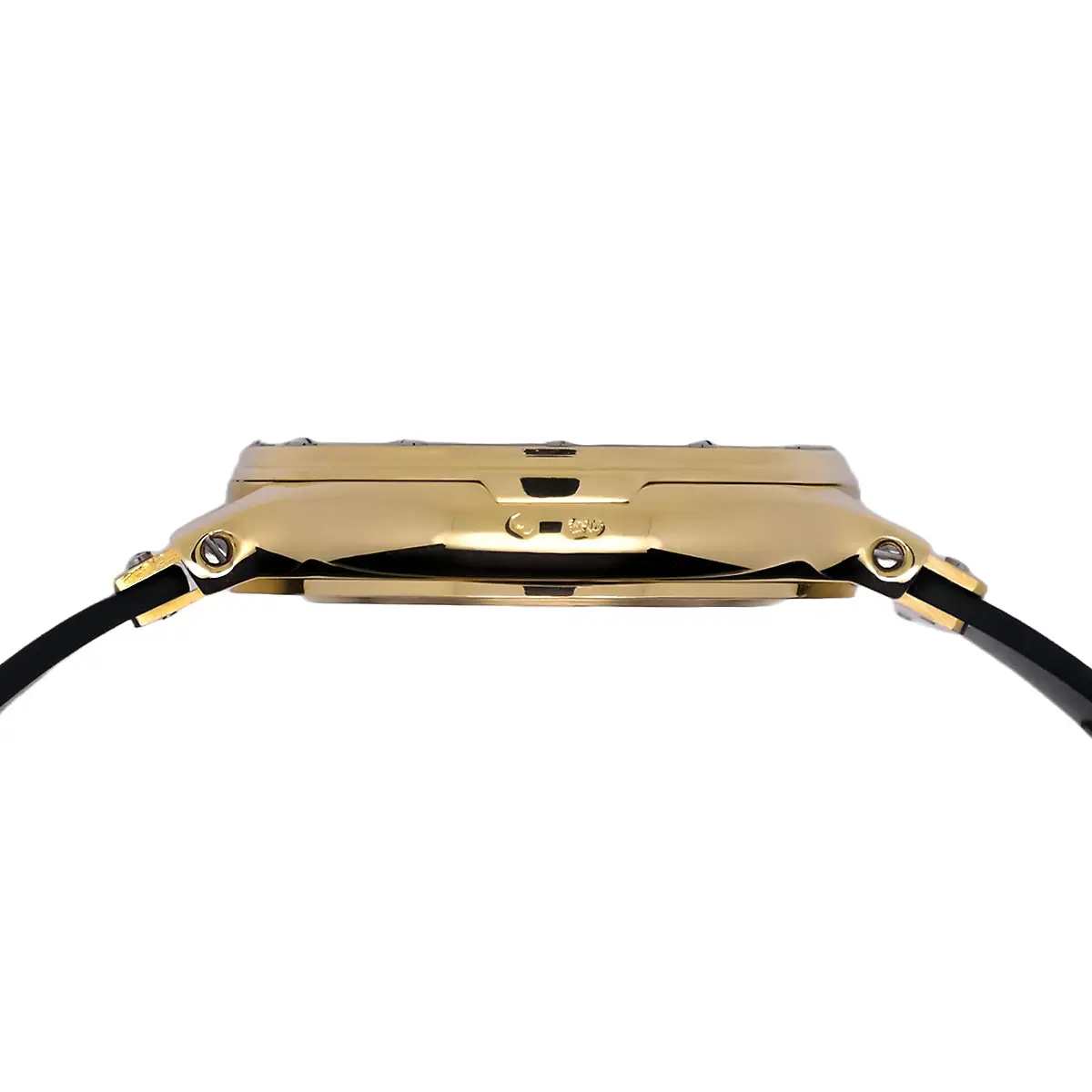
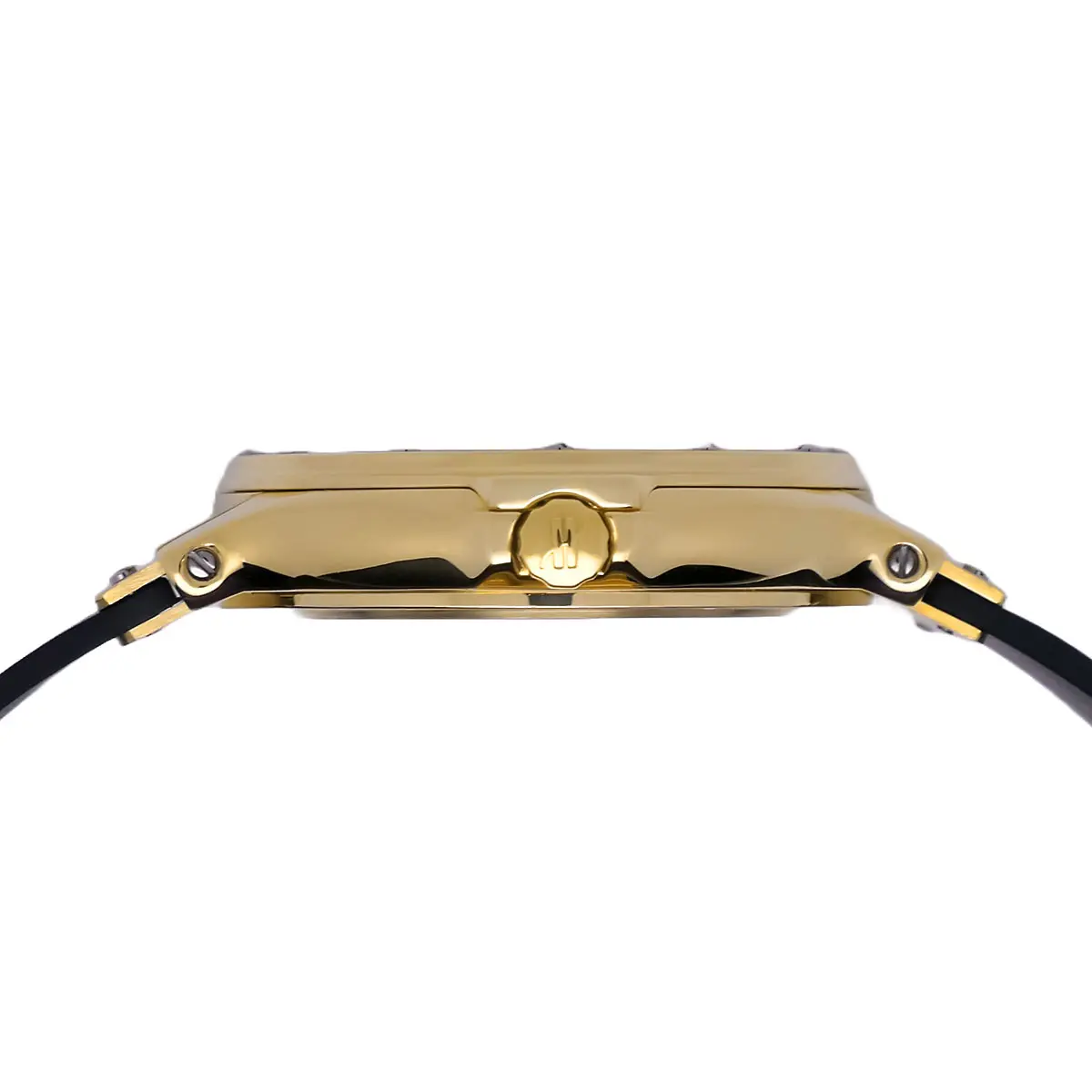
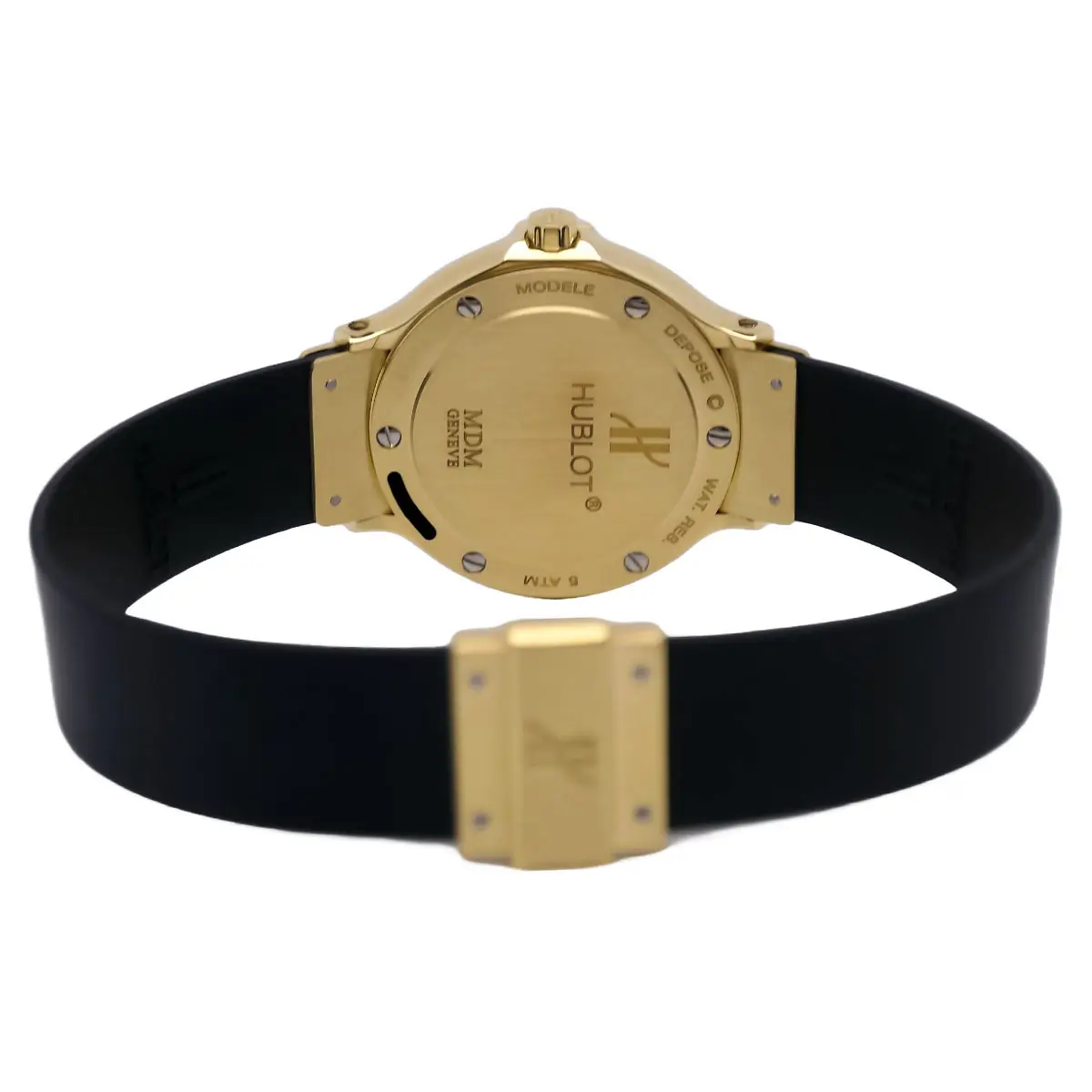
The case, crafted from 18k yellow gold, measures 28 mm in diameter and features the porthole shape characteristic of the Classic collection, with twelve visible bezel screws—a design element that has defined Hublot since the brand’s founding in 1980. The case back is solid. This particular watch comes with its original box and a service record from 2024.
Aesthetics & Readability
The black lacquered dial features no hour markers, reducing the display to slender hands and the date window at the 3 o’clock position, complemented by the Hublot and MDM logos. This understated design ensures excellent readability despite the compact 28 mm case size. For a ladies’ model of this era, the minimalist design is characteristic of the Classic Depose variant of the series, which deliberately omits the hour markers typically found on other Hublot Classic models.
All photos show exactly the item we offer - no stock images!
This item is taxed in accordance with § 25 A UStG - VAT cannot be shown.
For more information, see Technical Details.